
 En
En Ru
Ru Es
Es Fr
Fr Pt
PtEarth Electrodes
High-Voltage Insulation · Smart Power Distribution · Industrial Frequency Conversion.
Products

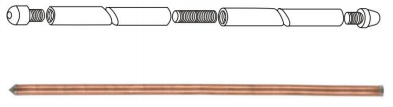
Solid Copper Earth Rod
Solid copper earth rods have greater resistance to corrosion. They are ideally used in applications where soil conditions are very aggressive, such as soils with high salt content.
Kit includes rod, driving head, and driving spike. And also can be provided the coupling dowel if you need it.
Standard: BS EN 50164-2.BS7430.UL467
Material: 99.9% Copper
Mode: CER
Application: Grounding System
Standard Dia.: 12mm, 14mm, 16mm, 20mm
Length: 1200mm, 1500mm, 1800mm
INQUIRY
| Part No. |
Norminal Diameter (mm) |
Length (mm) |
Weight (kg) |
| CER1212 | 12 | 1200 | 1.20 |
| CER1412 | 14 | 1200 | 1.64 |
| CER1612 | 16 | 1200 | 2.14 |
| CER1615 | 16 | 1500 | 2.68 |
| CER1618 | 16 | 1800 | 3.22 |
| CER2015 | 20 | 1500 | 4.19 |
| Other dimensions ofthe earth rod can be customized as your requested. | |||
What is Earth Rod?
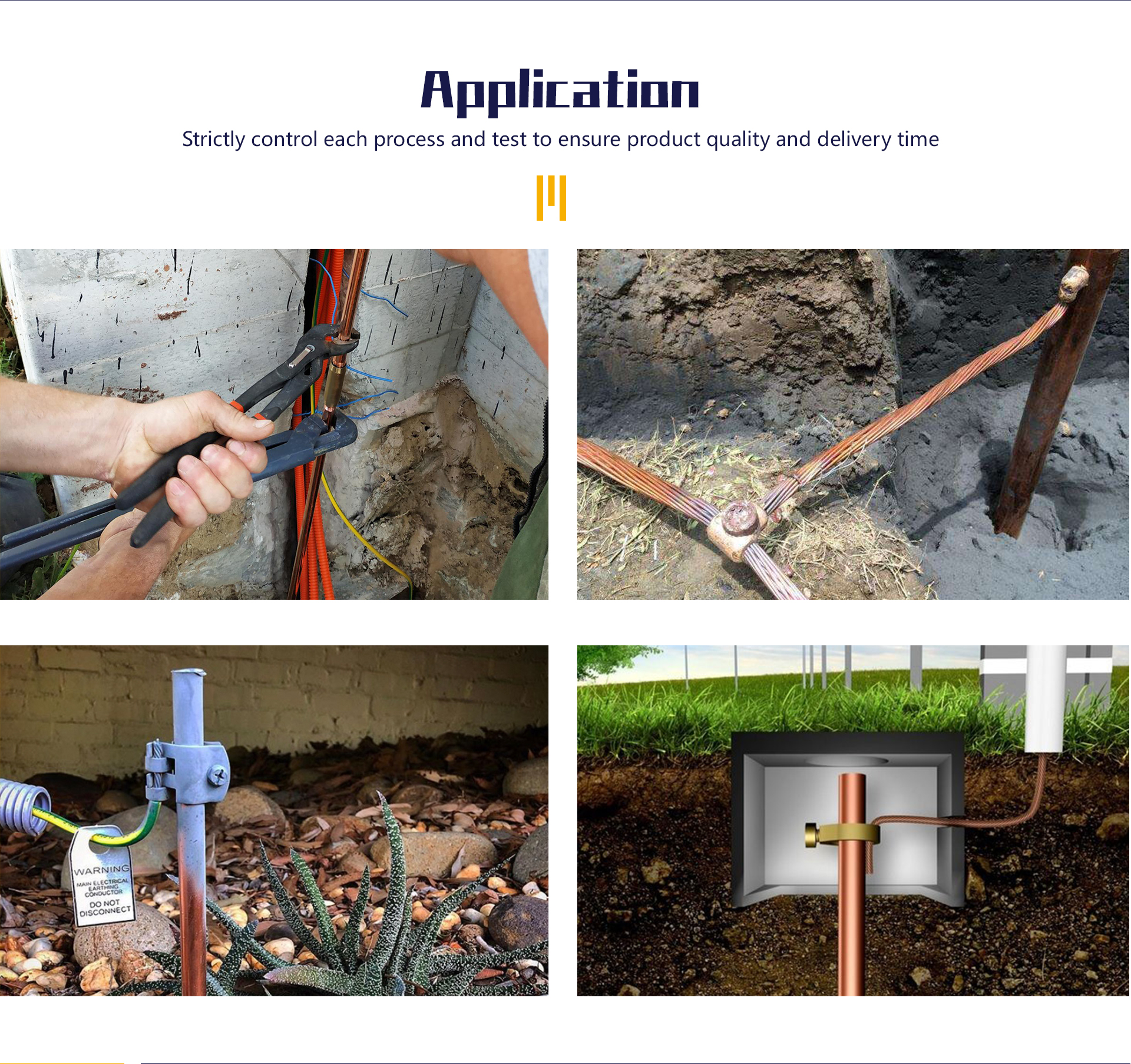
Earth rods are essential elements in the realization of durable low-resistance (underground) grounding systems. Their main advantage over other types of grounding electrodes such as grounding grids or buried conductors is that they allow to reach the deep layers of the ground which are often more conductive than the surface layers.
How it Works
The rod typically made of copper-bonded steel is inserted into soil at a depth sufficient to achieve low resistance. It is connected to the main earth terminal of the charger. Multiple rods can be used in parallel to further reduce impedance. Regular testing ensures that the earth resistance meets national electrical safety standards.
Benefits
Earth rods provide a simple cost-effective method of ensuring safety protecting users and maintaining compliance in challenging environments. They also improve the reliability of protective devices and lower liability risks for operators
Earth rods are essential elements in the realization of durable low-resistance (underground) grounding systems. Their main advantage over other types of grounding electrodes such as grounding grids or buried conductors is that they allow to reach the deep la
How it Works
The rod typically made of copper-bonded steel is inserted into soil at a depth sufficient to achieve low resistance. It is connected to the main earth terminal of the charger. Multiple rods can be used in parallel to further reduce impedance. Regular testing ensures that the earth resistance meets national electrical safety standards.
Benefits
Earth rods provide a simple cost-effective method of ensuring safety protecting users and maintaining compliance in challenging environments. They also improve the reliability of protective devices and lower liability risks for operators
| Part No. |
Norminal Diameter (mm) |
Length (mm) |
Weight (kg) |
| CER1212 | 12 | 1200 | 1.20 |
| CER1412 | 14 | 1200 | 1.64 |
| CER1612 | 16 | 1200 | 2.14 |
| CER1615 | 16 | 1500 | 2.68 |
| CER1618 | 16 | 1800 | 3.22 |
| CER2015 | 20 | 1500 | 4.19 |
| Other dimensions ofthe earth rod can be customized as your requested. | |||
What is Earth Rod?
Earth rods are essential elements in the realization of durable low-resistance (underground) grounding systems. Their main advantage over other types of grounding electrodes such as grounding grids or buried conductors is that they allow to reach the deep layers of the ground which are often more conductive than the surface layers.
How it Works
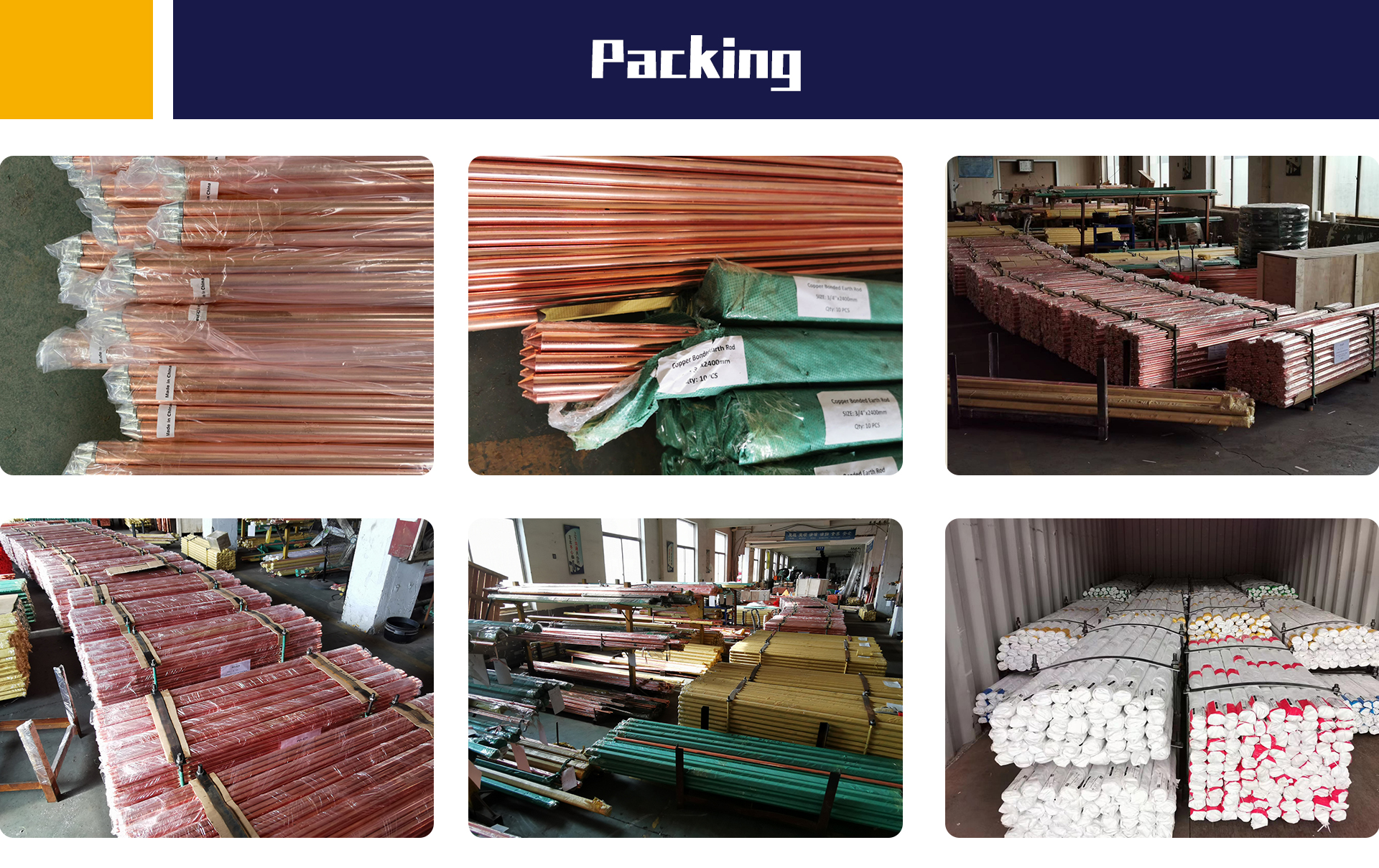
The rod typically made of copper-bonded steel is inserted into soil at a depth sufficient to achieve low resistance. It is connected to the main earth terminal of the charger. Multiple rods can be used in parallel to further reduce impedance. Regular testing ensures that the earth resistance meets national electrical safety standards.
Benefits
Earth rods provide a simple cost-effective method of ensuring safety protecting users and maintaining compliance in challenging environments. They also improve the reliability of protective devices and lower liability risks for operators
Earth rods are essential elements in the realization of durable low-resistance (underground) grounding systems. Their main advantage over other types of grounding electrodes such as grounding grids or buried conductors is that they allow to reach the deep la
How it Works
The rod typically made of copper-bonded steel is inserted into soil at a depth sufficient to achieve low resistance. It is connected to the main earth terminal of the charger. Multiple rods can be used in parallel to further reduce impedance. Regular testing ensures that the earth resistance meets national electrical safety standards.
Benefits
Earth rods provide a simple cost-effective method of ensuring safety protecting users and maintaining compliance in challenging environments. They also improve the reliability of protective devices and lower liability risks for operators